When you navigate to a website, buy a product online, or read a blog, you are interacting with a domain name. But have you ever stopped to ask: Who actually owns that corner of the internet? Is it a massive corporation, a teenager in a basement, or a scammer operating from overseas?
The internet was built on a foundation of transparency and accountability. To maintain this, a system was created to track the ownership of every single domain name registered globally. This system is known as Whois.
However, as the internet has evolved, so has the need for anonymity. This has created a complex tug-of-war between public transparency and personal safety, giving rise to services like domain privacy protection.
In this comprehensive guide, we will answer the fundamental questions of the web: What is Whois, how do you perform a search, what data is actually stored, and how does private domain registration protect your identity in 2026?
Part 1: What is Whois?
To understand the mechanics of the web, we must start with the definition. What is Whois?
Whois (pronounced “Who is”) is a standard internet protocol used to query databases that store the registered users or assignees of an internet resource. These resources include domain names, IP address blocks, and autonomous systems.+1
Think of what is Whois in terms of a real-world analogy: It is the “White Pages” or the public land registry of the internet. Just as you can look up property deeds to see who owns a house, you can use the Whois protocol to see who owns a domain.
The Role of ICANN
The Whois system is not owned by one single company. It is decentralized but regulated by ICANN (Internet Corporation for Assigned Names and Numbers). ICANN mandates that every time a whois domain is registered—whether it is a .com, .net, or .org—the registrar (like GoDaddy or Namecheap) must collect accurate contact information from the buyer.
This requirement ensures that there is always a point of contact for legal disputes, technical issues, or abuse reports.
Part 2: What is Whois Database?
A common misconception is that there is one single giant server holding all the world’s data. So, what is whois database exactly?
The Whois database is actually a distributed collection of databases maintained by individual registries and registrars.
- The Registry: The organization that manages the TLD (Top Level Domain). For example, Verisign manages all
.comdomains. - The Registrar: The retailer where you bought the domain (e.g., Namecheap).
When you register a domain, your information is stored in the local database of your registrar. When someone queries your domain, the request is routed through the network to pull the data from that specific location.
This distributed structure is why what is whois data can sometimes vary depending on which tool you use to access it—some tools cache the data, while others query the live registry directly.
Part 3: What is Whois Lookup? (The Action)
Now that we understand the system, how do we access it? This brings us to the concept of the lookup.
What is whois lookup? It is the specific action of sending a query to the Whois database to retrieve information about a domain name.
When you ask what is a whois lookup (or what is a whois search, as it is often called), you are referring to the process of typing a domain name into a search tool and hitting “Enter.”
How a Whois Search Works
- Input: You enter
example.cominto a Whois search tool. - Protocol: The tool sends a request via Port 43 (the technical port for Whois) or via HTTPs.
- Routing: The system identifies that
.comis managed by Verisign and routes the query there. - Retrieval: The database returns the record associated with that domain.
There are different ways to perform what is a whois search:
- Web-Based: Using sites like Whois.com or DomainTools.
- Command Line: Developers use the terminal command
whois domain.com. - Automated API: Businesses use APIs to perform thousands of lookups per minute for lead generation or security analysis.
Part 4: What is Whois Data? (The Result)
When the search is complete, you are presented with a record. What is Whois data? It is the actual block of text returned by the query.
A standard raw Whois record contains highly specific categories of information. Understanding these fields is critical for anyone working in IT, law, or marketing.
1. Registrar Information
- Registrar Name: The company that sold the domain.
- IANA ID: A unique number assigned to that registrar.
- Abuse Contact: An email and phone number strictly for reporting spam or hacking.
2. The Three Contacts
This is the most controversial part of what is whois data.
- Registrant: The legal owner of the domain.
- Admin: The person authorized to transfer or update the domain.
- Tech: The person responsible for the technical server maintenance.
3. Critical Dates
- Creation Date: This tells you the age of the domain. Cybersecurity experts know that a domain created yesterday is riskier than one created 10 years ago.
- Expiration Date: When the domain will expire if not renewed.
- Updated Date: The last time a change was made to the record.
4. Status Codes
You will often see lines like clientTransferProhibited. This is part of what is domain protection at the registry level, preventing the domain from being stolen or transferred without permission.
Part 5: The Need for Secrecy: What is Domain Privacy?
In the early days of the internet, Whois data was fully public. If you registered a website for your hobby, your home address, personal phone number, and email were visible to anyone who performed a lookup.
As spammers, scammers, and identity thieves began scraping this data, a solution was needed. This leads us to the question: What is domain privacy?
Domain privacy (often sold as “ID Protection” or “WhoisGuard”) is an add-on service provided by registrars that masks your personal contact information in the public Whois directory.
What is Whois Privacy vs. Domain Privacy?
These terms are often used interchangeably.
- What is whois privacy? This usually refers to the concept or the result—keeping your Whois record private.
- What is private domain registration? This refers to the specific service you purchase during the checkout process.
When you ask what is private registration for domain name services, you are asking about a proxy service.
How Private Registration Works
When you buy private domain registration, the registrar replaces your personal details with their own generic information.
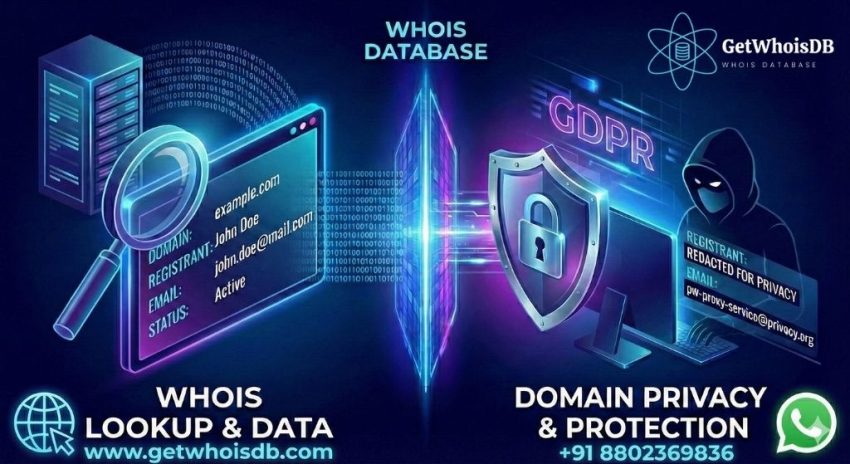
Without Privacy:
Registrant Name: John Doe Registrant Email: john.doe@gmail.com Registrant Address: 123 Main St, New York
With Privacy:
Registrant Name: Privacy Protection Service LLC Registrant Email: pw-4829a@privacy-guardian.org Registrant Address: PO Box 555, Anytown
So, what is a private registration for domain name actually achieving? It allows you to legally own the domain while the proxy service stands in front of you, shielding your identity from the public eye. Any emails sent to the proxy email address are typically forwarded to your real inbox, keeping you reachable but anonymous.
Part 6: What is Domain Protection?
While privacy hides your identity, protection secures the asset. It is important to distinguish what is domain privacy protection from security locks.
What is domain protection? Broadly, this refers to a suite of security measures designed to keep your domain safe from hijacking or accidental deletion. While privacy protects you (the person), domain protection protects the domain (the asset).
Many registrars bundle these features. When they sell a “Premium Protection” package, they are usually combining:
- Whois Privacy: Hiding your name.
- Registry Lock: A high-security lock that requires manual verification to transfer the domain.
- Auto-Renewal Protection: Ensuring the domain doesn’t drop if your credit card fails.
So, what is domain privacy protection specifically? It is the combination of keeping your identity secret (Privacy) and keeping your domain locked (Protection).
Part 7: GDPR and the “Blackout” of Data
We cannot answer what is whois domain management without discussing the massive shift that occurred in 2018.
The European Union implemented the General Data Protection Regulation (GDPR). This law declared that personal data (like names and emails) cannot be published publicly without explicit consent.
The Impact on Whois
Suddenly, the answer to what is whois lookup results changed. Even if a user did not pay for private domain registration, their data was forcibly redacted by the registrar to comply with the law.
Today, if you perform a whois search, you will likely see “REDACTED FOR PRIVACY” across most fields, regardless of whether the owner bought a privacy package. This has made what is whois data much harder to access for marketers and researchers, but significantly safer for individuals.
Part 8: Who Still Needs Whois Data?
If privacy services and GDPR hide everything, is Whois still useful? Yes.
Despite the redactions, what is whois database access remains a multi-million dollar industry.
1. Cybersecurity Professionals
Security teams use Whois to track botnets. Even if the name is hidden, the Registration Date and Name Servers help them identify patterns of malicious infrastructure.+1
2. Marketers and Agencies
Agencies use Newly Registered Domain lists to find new businesses. While they can’t always see the owner’s name, they know a new business was just formed. They often use “Historical Whois” (data saved before the privacy was turned on) or cross-reference corporate registrations to find leads.
3. Intellectual Property Lawyers
If someone steals your trademark, you need to know who they are. Lawyers can file a specific legal request to the registrar to reveal the underlying data behind the what is whois privacy shield, proving that privacy is not absolute anonymity.
Conclusion: Balancing Transparency and Safety
The internet is no longer the open book it once was. Understanding what is Whois is essential for navigating the digital world, whether you are a business owner protecting your brand or a user protecting your identity.
To summarize the key takeaways:
- What is Whois? The protocol for identifying domain ownership.
- What is a Whois lookup? The tool used to query the Whois database.
- What is Whois data? The administrative and technical details returned by the search.
- What is domain privacy? The service that masks your personal details from the public.
In 2026, the question of what is private registration for domain name services is more relevant than ever. While GDPR provides a baseline of safety, purchasing domain privacy protection ensures that your personal home address and phone number remain truly private, shielding you from spam, scams, and unwanted solicitation.
Whether you are performing a whois search to buy a domain or hiding your own details to stay safe, the Whois system remains the silent, beating heart of internet connectivity.